Your Physical Cellar and Digital Collection Should Work as One—Here's How in 2026
Blogzilla AI · 12 August 2026 · 11 min read
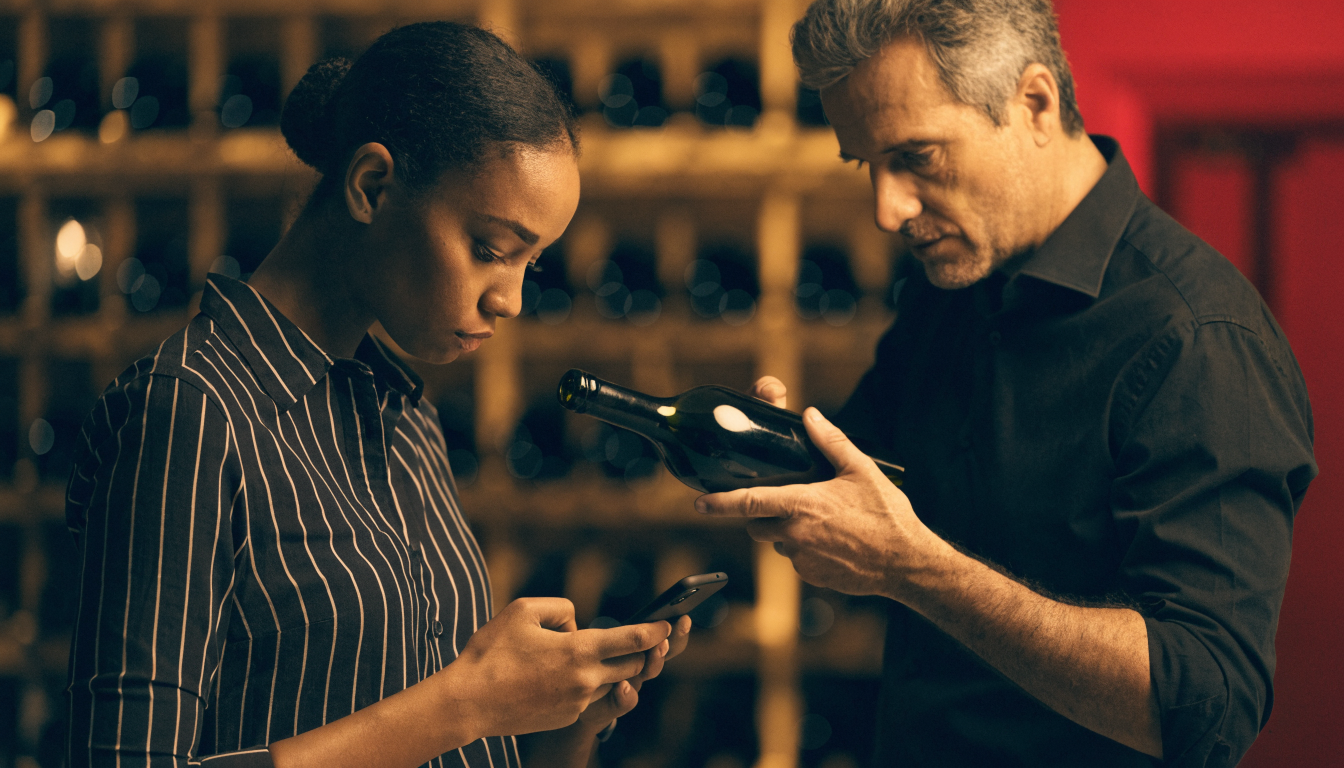
There's a moment every serious collector knows. You open your cellar, reach for a bottle, and realise you have no idea whether it's ready to drink—or whether you bought it in the first place. That moment is expensive. In 2026, it's also completely avoidable.
Smart cellar hardware and intelligent software platforms have finally grown up together. The gap between your physical wine rack and your digital inventory is closing fast, and a personal wine cellar management app now bridges hardware sensors and collection data seamlessly. This guide covers what matters, what's new, and how to make the two worlds work as one.
Key Takeaways
Connected wine storage hardware—once a premium feature—now ships standard in mid-range units (USD 1,200–3,500), making sensor integration accessible to serious home collectors worldwide.
Collectors in high-ambient-temperature markets (Singapore, São Paulo, Dubai) face conditions that make hardware-to-app integration a functional necessity, not an upgrade.
The most practical integration method for most collectors today is a third-party calibrated sensor feeding data to a collection management platform via an automation bridge—not native hardware integration, which remains limited.
Detailed cellar condition logs (temperature, humidity, timestamp granularity) carry documented secondary market value: auction houses report provenance records can affect hammer price by 10–25% on fine and rare bottles.
An AI advisor connected to real collection data—your specific vintages, your cellar's temperature curve, your purchase history—provides materially different guidance than any generic wine chatbot.
The single most underrated step in digital cellar management is adding physical location metadata (rack, row, position) to every bottle entry from the start.
Why 2026 Is a Turning Point for Cellar Technology
The consumer wine storage market has matured quickly. Industry reports indicate the global wine cooler market reached approximately USD 1.8 billion in 2023, with projected compound annual growth of 9–11% through 2030, driven primarily by demand for connected devices. Buyers increasingly expect more than consistent temperature control—they want their hardware to communicate directly with their personal wine cellar management apps.
That expectation is pushing hardware manufacturers to embed Wi-Fi sensors, Bluetooth humidity monitors, and vibration alerts into mid-range units—features that were premium add-ons just three years ago. Units in the USD 1,200–3,500 range now routinely include sensor connectivity that previously required professional installation.
For collectors outside the United States and Western Europe, this shift carries particular weight. In markets across Southeast Asia, the Middle East, and Latin America, ambient temperatures and humidity swings are far more extreme than conditions inside a traditional Burgundy cave, which maintains approximately 45–50°F and 90–95% relative humidity year-round due to geological stability. Collectors in Singapore or São Paulo aren't choosing between storage tiers for aesthetics—they're making decisions that directly affect whether a wine survives the year intact. Hardware that connects to a personal wine cellar management app isn't a luxury in those climates. It's infrastructure.
Understanding the Hardware Landscape
Wine Coolers vs. Purpose-Built Cellars
A wine cooler maintains bottles at a stable temperature, typically within a ±3°F variance. A purpose-built cellar—whether underground, climate-controlled, or a specialist cabinet—manages temperature, humidity, light, and vibration simultaneously, adhering to standards outlined in ASHRAE guidelines for wine storage environments.
Know the difference before you buy. A cooler costing a few hundred dollars suits everyday bottles you'll open within a year. For aged wines or investment bottles, you need a unit that maintains 50–59°F (10–15°C)—the range recommended by the Institute of Masters of Wine—holds 60–70% relative humidity, and sustains near-zero vibration.
What to Look for in Connected Hardware
The most useful cellar units in 2026 share a few traits:
App connectivity via API or open protocol — so a personal wine cellar management app can read sensor data without vendor lock-in
Dual-zone temperature control — discrete red and white storage in one unit, allowing simultaneous 55°F and 45°F zones
Real-time alerts — push notifications when temperature or humidity drifts outside safe ranges (±2°F and ±5% RH represent industry best practice)
Data logging with timestamp granularity — historical records at 15-minute or hourly intervals, not just live snapshots
That last point is underrated. A wine stored at 58°F for six years but subjected to three significant temperature spikes—say, 68°F for 48 hours each—ages differently than one kept perfectly stable, and the secondary market recognises this. Logged data tells that story. Serious buyers increasingly demand it.
Wirecutter's 2026 wine fridge review roundup (https://news.google.com/rss/articles/CBMibkFVX3lxTE9hV2hCWm5FaVFOVHYtUlV2UHZoRkxiX0F1a2JoSFI5b29fZzdKbk5YZXBHMGd0aDhXZXRaVXdmSnVfbE9PaG1tVWI4Z0R3WmlLUTBzekJhYm1nTUY0US1Oa09tQWRPSkVMMzRxX2hB?oc=5) identifies consistent temperature performance and energy efficiency as the top differentiators among tested units—a useful benchmark when comparing models before committing.
Connecting Hardware to Your Digital Collection
The Integration Gap—and How to Close It
Most wine fridges and cellar cabinets still don't natively integrate with collection management software. In practice, you're looking at one of three approaches:
Manual sync — log cellar conditions yourself inside your personal wine cellar management app (labour-intensive, but zero upfront cost)
Third-party smart sensors — devices like Govee or SensorPush that export data via IFTTT or Zapier to cloud platforms or spreadsheets (the most practical option for retrofit installations)
Native platform integrations — emerging partnerships between hardware brands and collection software providers (increasingly common, but still limited in scope)
Option two is the most practical for most collectors right now. A calibrated Bluetooth or Wi-Fi sensor inside your cellar feeds real-time readings to a hub, which triggers alerts or logs data to a platform of your choice. Consumer-grade units cost USD 30–80 and typically achieve ±0.5°F temperature accuracy and ±3% RH humidity accuracy.
What a Personal Wine Cellar Management App Actually Adds
Hardware confirms the environment is right. Software tells you what to do with the bottles inside it. A capable personal wine cellar management app layers on top of sensor data to deliver:
Drink windows — dynamic estimates based on vintage, producer, region, and your actual storage history, not generic "drink by" dates
Valuation updates — periodic secondary market pricing from auction aggregators such as Liv-ex
AI-driven recommendations — which bottles to open now, hold, or sell, based on your full portfolio context
Regional context — so you understand why a Barolo from Cannubi typically needs more time than a Beaujolais cru, and how your specific cellar conditions accelerate or delay that timeline
Platforms with genuine depth in wine knowledge do more than catalogue what you own—they help you understand it. Exploring wine regions and their ageing profiles grounds these recommendations in appellation-specific practice and gives collectors a working knowledge of why certain bottles demand more patience than others.
The AI Advisor Layer: More Than a Chatbot
The best AI advisors in wine platforms work from your actual collection data—what you own, what you've drunk, how your cellar is configured, what you paid, and your cellar's environmental history. They surface personalised recommendations a generic chatbot cannot provide.
That's a fundamentally different proposition from asking a general-purpose AI "when should I open my 2018 Barolo?" The answer changes depending on whether your cellar runs at 55°F or 62°F (a meaningful age differential per degree), whether you bought on release or at auction five years later, whether your region experiences seasonal humidity swings, and whether your tasting history shows you drink wines young or hold them longer than peer averages.
Consider a practical example: 24 bottles of Northern Rhône Syrah across three vintages (2017, 2019, 2021). An AI advisor connected to your personal wine cellar management app can identify that your 2019s are approaching their optimal drinking window (typically 7–10 years for Côte-Rôtie or Hermitage, adjusted for your storage temperature curve), your 2021s need four more years, and your 2017s—based on recent auction results and your condition logs—have appreciated enough to justify selling six bottles to fund new acquisitions. That's portfolio thinking, not cataloguing.
Building Global Cellar Knowledge
Wine storage knowledge isn't uniform across the world, and your platform should reflect that. A collector in Hong Kong navigating warehouse storage (reliable temperature control, but often 85%+ humidity near the coast) operates under entirely different conditions—and costs—than someone with a private cellar in Bordeaux's clay-limestone geology.
If you're expanding your cellar into unfamiliar regions, grounding yourself in regional knowledge pays dividends. Understanding appellation-specific ageing profiles—Nebbiolo's typical 10–20 year cellaring window versus Pinot Noir's 5–10 years—directly informs which bottles deserve cellar space and for how long. The wine regions explorer offers a structured way to develop that knowledge across major appellations, including detailed profiles on Italy's most age-worthy varieties.
Understanding a region's terroir isn't academic. It's the difference between knowing a wine needs a decade and understanding why—which makes you a smarter buyer and a more intentional steward of your collection.
Cellar Organisation: The Underrated Foundation
The Bin System That Actually Works
Digital platforms are only as useful as the data you put in. The single biggest mistake collectors make is adding bottles to an app without location metadata. When your personal wine cellar management app holds 200+ bottles, knowing you own a 2016 Ridge Monte Bello is nearly useless if you can't locate it within thirty seconds.
Build a bin system—physical labels, numbered slots, or a grid coordinate—and mirror it exactly in your app. Every bottle entry should include rack, row, and position. This sounds tedious once. It saves ten minutes every time you reach for a specific bottle.
Provenance Tracking for Serious Collectors
For bottles worth holding or selling, provenance records matter enormously on the secondary market. Major auction houses including Christie's and Sotheby's note that documented cold-chain history directly affects hammer price—estimates range from 10–25% depending on bottle rarity and condition. Log purchase receipts, auction invoices, storage condition reports, and transfer history inside your platform. Collectors who demonstrate an unbroken, well-documented storage record command meaningful premiums at resale.
A Practical 2026 Setup
Here's a realistic configuration for a serious home collector:
Hardware — a dual-zone connected wine cabinet (USD 1,500–4,000, e.g., EuroCave, Liebherr, or comparable) or a smart-sensor-equipped dedicated cellar space
Sensors — a calibrated Wi-Fi or Bluetooth temperature and humidity logger (±0.5°F accuracy minimum) with alert thresholds at ±2°F and ±5% RH
Platform — a personal wine cellar management app with AI advisory capability, regional knowledge depth, secondary market data integration, and API support for sensor connectivity
Habit — a monthly fifteen-minute review: check sensor logs for anomalies, review drink windows, update tasting notes, and audit bottles flagged by the platform
The habit is what makes the system live. Technology handles the heavy lifting, but closing the loop remains your responsibility.
Frequently Asked Questions
Q: What is the minimum hardware setup needed before a wine cellar management app adds real value?
A: At minimum, you need a storage unit capable of holding a stable temperature (±3°F or better) and at least one calibrated sensor logging temperature and humidity at regular intervals. Without environmental data, an app functions only as a catalogue—useful, but unable to adjust drink windows or flag storage anomalies. A single consumer-grade Wi-Fi or Bluetooth sensor costing USD 30–80 is sufficient to unlock the app's environmental intelligence features.
Q: How do third-party sensors like SensorPush or Govee compare to sensors built into premium wine cabinets?
A: Built-in cabinet sensors are convenient and pre-calibrated to the manufacturer's spec, but they typically log data only to the brand's own app, which may not integrate with your collection management platform. Third-party sensors offer more flexibility: they can feed data to automation bridges like IFTTT or Zapier, and many support direct API connections. Consumer-grade accuracy (±0.5°F, ±3% RH) is adequate for most home cellars; professional-grade sensors (±0.1°F) are worth considering only if you're managing investment-grade inventory worth insuring.
Q: Why does cellar temperature matter so much to secondary market value, and how do platforms help document this?
A: Temperature directly controls the rate of chemical reactions in wine—every degree above the optimal 55°F range accelerates ageing, sometimes irreversibly. On the secondary market, buyers and auction houses treat documented storage history as evidence of quality preservation. A platform that logs your sensor data with timestamps creates an auditable record of your cellar conditions over time, which you can export and share with a prospective buyer or auction consignment specialist. This is increasingly expected for bottles valued above USD 500 per unit.
Q: Can an AI wine advisor genuinely distinguish between two bottles of the same appellation in my cellar, or does it give generic regional guidance?
A: A well-designed AI advisor trained on your actual collection data can differentiate between two bottles of the same appellation if it has access to vintage-level data, your purchase date, your cellar's recorded temperature curve, and your tasting history. The quality of recommendations scales directly with data richness: the more accurately you've logged bottle location, purchase provenance, and storage conditions, the more specific and actionable the guidance becomes. Generic regional advice is a fallback for when that data is missing, not the intended output.
Q: How should collectors in high-humidity climates like Hong Kong or Singapore approach cellar management differently?
A: High-humidity environments (above 80% RH) accelerate label deterioration and can promote mould on corks, even when temperature is controlled. Collectors in these markets should prioritise units with active humidity regulation (not just passive control), store bottles in protective sleeves or wooden cases where possible, and log humidity readings alongside temperature. When consulting a platform's drink windows, flag your climate context explicitly if the app supports regional settings—humidity above optimal ranges can subtly accelerate wine evolution even without temperature problems.
Q: Is it worth setting up a bin location system for a collection under 100 bottles?
A: Yes, and for a simple reason: collections grow faster than expected, and retrofitting location data to 200 bottles is genuinely painful. Setting up a grid or numbered rack system from the beginning takes under an hour and pays dividends immediately. Even at 50 bottles, location metadata transforms a catalogue into a navigable inventory—particularly when you're reaching for a specific bottle during dinner service and don't want to disturb adjacent wines.
Q: What should collectors look for when comparing collection management platforms beyond basic inventory features?
A: Beyond cataloguing, prioritise three capabilities: regional knowledge depth (does the platform explain why ageing profiles differ, not just list them?), sensor or API integration (can it ingest your cellar's environmental data?), and AI advisory quality (does it reason from your specific portfolio or serve generic answers?). Secondary market data integration—live or periodic pricing from sources like Liv-ex—is valuable if you manage bottles as assets. Platforms that combine all four functions in a single interface eliminate the coordination overhead of stitching together separate tools.
Where to Go From Here
The gap between physical cellar and digital intelligence narrows every year. The collectors who benefit most aren't necessarily the ones with the most expensive hardware—they're the ones who've connected their storage environment to a platform that helps them make better decisions with what they own, and who've built the discipline to review that system regularly.
Start simple. Get the sensor in. Build your inventory with location data from day one. Then let the platform do its work. Bottlelier brings together collection management, an AI advisor, a global wine atlas, and a growing academy in one place—designed for collectors who want to understand their cellar, not just count bottles in it.
Your cellar deserves more than a spreadsheet. In 2026, there's no reason it should have less.
news